The MOSAIC rule replaced the old "light-sport aircraft" limits on sport pilots with a new regulation, 14 CFR 61.316. The new section took effect October 22, 2025. It sets performance and design limits for the aircraft a sport pilot may fly, and it no longer limits weight.
What 61.316 allows
A sport pilot may act as pilot in command of an aircraft that, since its original certification, meets all of these:
- Stalling speed. For an airplane, a stalling speed without lift-enhancing devices (VS1) of not more than 59 knots CAS at maximum certificated takeoff weight and the most critical center of gravity. For other aircraft, not more than 45 knots CAS.
- Seats. For an airplane, not more than four seats. For other aircraft, not more than two.
- Cabin. Non-pressurized.
- Landing gear. Fixed, for powered aircraft other than gliders, unless the pilot has the training and endorsement described below.
- Propeller. Fixed, ground-adjustable or automated controllable pitch, unless the pilot has the training and endorsement described below.
- Helicopters. Only those certificated with the simplified flight controls designation.
- Gyroplanes. A fixed-pitch, semi-rigid, teetering, two-blade rotor system.
The section sets no maximum weight and no maximum airspeed. The FAA's fact sheet on the rule says it "removes aircraft weight and airspeed limitation" and permits any powerplant type except turbojet.
The section applies to an aircraft that has met these requirements "since its original certification." The FAA's fact sheet says the same: the aircraft must meet the requirements at the time of original certification.
What stays limited
The privileges and limits of a sport pilot certificate are in 14 CFR 61.315. Among them:
- One passenger. A sport pilot may not carry more than one passenger, whatever the number of seats.
- No compensation or hire, and no flight in furtherance of a business.
- Altitude. Not above 10,000 feet MSL or 2,000 feet AGL, whichever is higher.
- Weather. Not with less than 3 statute miles of flight or surface visibility, and not without visual reference to the surface.
- Airspace. Not in Class A. In Class B, C and D airspace and at towered airports, only with the training and endorsement of 61.325.
- Night. Only with the privileges described below.
- Towing. Not permitted.
- Type ratings. Not an aircraft that requires one.
Retractable gear and controllable pitch propellers
Under 61.331, a sport pilot may fly an aircraft with retractable landing gear, or an airplane with a manual controllable pitch propeller, after one of two things: meeting the complex airplane training and endorsement requirements of 61.31(e), or receiving and logging ground and flight training in such an aircraft from an authorized instructor, with an endorsement that the pilot is proficient.
Night flight
Under 61.329, a sport pilot may fly at night after:
- 3 hours of night flight training in the category and class, including one night cross-country flight with a landing at least 25 nautical miles from the departure airport (powered parachutes excepted) and at least 10 takeoffs and 10 landings to a full stop at night;
- a logbook endorsement from an authorized instructor; and
- holding a medical certificate issued under 14 CFR part 67, or meeting the conditions of 61.113(i). The FAA's MOSAIC page describes this as an FAA medical or BasicMed.
A driver's license alone does not meet the night requirement.
Pilots with a higher certificate and no medical
The rule is not only for holders of a sport pilot certificate. The table in 14 CFR 61.303 covers a pilot who holds at least a recreational pilot certificate with a category and class rating and who has a U.S. driver's license but no medical certificate. That pilot may fly any aircraft in that category and class that meets 61.316. The sport pilot endorsements are not required, but the limits of 61.315 apply, including the one-passenger limit.
A pilot who relies on a driver's license must also meet 61.303(b). The pilot must:
- comply with every restriction on the driver's license;
- have been found eligible for at least a third-class medical certificate at the most recent application, if the pilot has ever applied;
- not have had the most recently issued medical certificate suspended or revoked, or the most recent special issuance authorization withdrawn; and
- not know or have reason to know of a medical condition that would make the pilot unable to operate the aircraft safely.
What isn't known yet
The FAA's MOSAIC page lists a frequently-asked-questions page for pilots as "coming soon." It does not link to an FAA list of aircraft models that meet 61.316. Whether a particular aircraft qualifies depends on the stalling speed and configuration established at its original certification. A pilot who is unsure about a particular aircraft can ask the local Flight Standards District Office.
This article reports what the regulations say. It is not an FAA determination.
Sources
All read on October 11, 2026. The regulation text is the eCFR version in effect September 1, 2026.
- 14 CFR 61.316, performance limits and design requirements for the aircraft a sport pilot may operate.
- 14 CFR 61.315, privileges and limits of a sport pilot certificate.
- 14 CFR 61.303, operating limits and endorsement requirements by certificate and medical qualification.
- 14 CFR 61.329, night privileges, and 14 CFR 61.331, retractable landing gear and manual controllable pitch propellers.
- FAA, Modernization of Special Airworthiness Certification (MOSAIC), last updated April 2, 2026.
- FAA, MOSAIC Fact Sheet.
- The MOSAIC final rule, Federal Register, July 24, 2025.
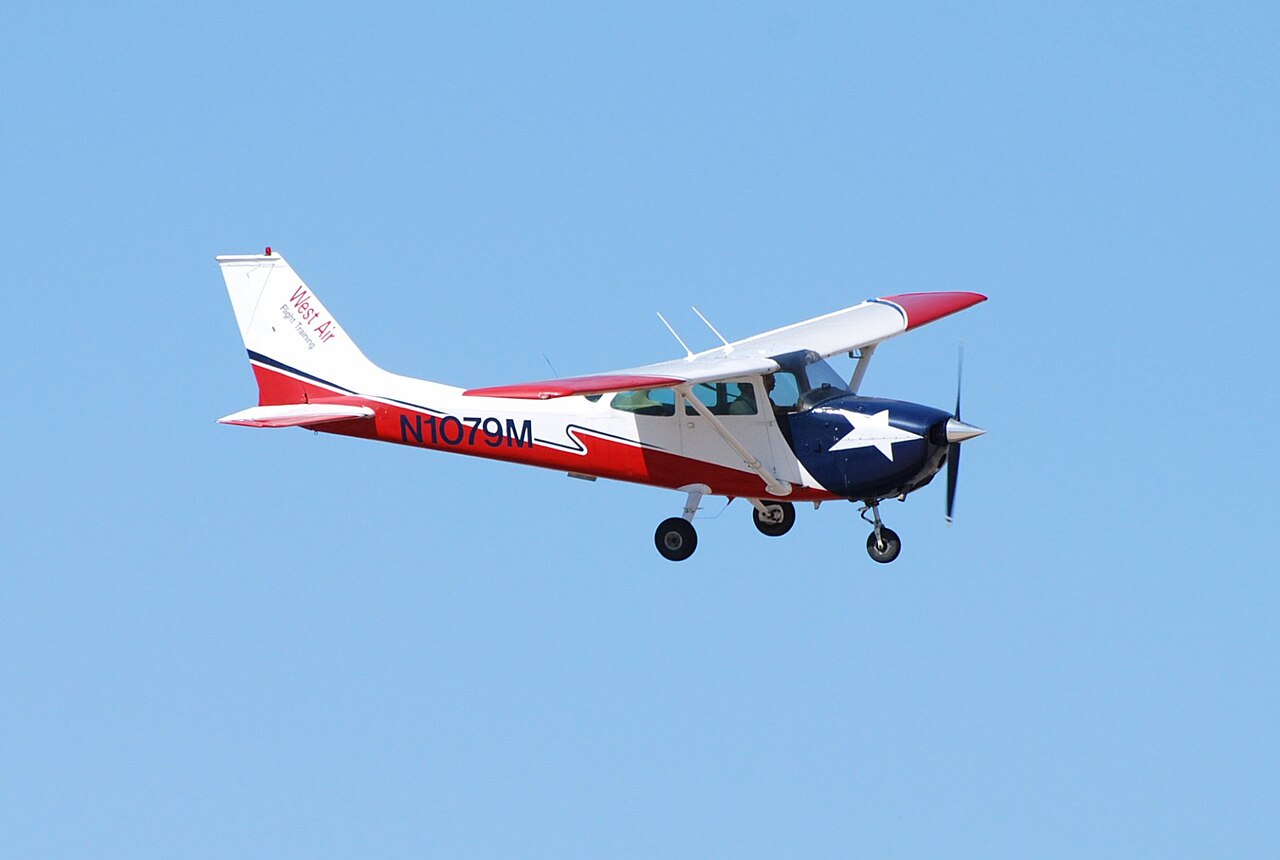
Photo: West Air Flight Training Cessna 172L Skyhawk N1079M by Tomás Del Coro, used under the Creative Commons Attribution-ShareAlike 2.0 license, resized. The airplane pictured is an illustration only.
